Epistemilogy - Theory of Knowledge.
Epistemilogy -> aa + ips + it + tam + loka + ay
'aa' -> prefix for "towards"
'ips' -> verb root for "to wish to obtain"
'it' - suffix for Past Passive Particple, that converts a Verb Root to Verbal, Adjective and Noun Form indicating Past Tense with Passive voice. "t" is the main suffix and man y times it is optionally joined with "i" before "t". Other letters possible are "n", "dh", "T", and "Dh", besides "t", where "T" and "Dh" are Hard and Soft Unaspirated Sounds Cerebrals.
'tam' - suffix for Superlative - like "Ist" and "est" for English.
'loka' - world, the stage on which the Ultimate Reality or Consciousness Plays upon - the - the Knowledge and Theory behind.
'aya' - suffix for Adjective - indicating Potential Participle or Gerundive - something that needs to be done or followed.
So what could be "towards the wish to obtain the best "world" or the "theory" or "knowledge" behind.
You decide if the meaning comes cose to the meaning in the English word.
One can also write as "aa + paa + Ist + Tam + Loka + ya".
'aa' - means 'Towards'.
'paa' - means 'To Obtain' - ' Pa' and 'Paa' are same.
'iSt' - 'most desired' - like related to God and Knowledge is the essence of God.
'tam' - superlative suffix.
'lok' - 'world, domain, field, knowledge or God where shines'.
'aya" - suffix for Adjective - indicating Potential Participle or Gerundive - something that needs to be done or followed.
Again you decide if the word meaning comes close to the English word.
Friday, June 13, 2008
Saturday, June 7, 2008
More corruptions of the word "Ram"
In continuation of the series on the word "Ram", and trying to see how ancient and how common the word spread, and what was the basis and the reason for this phenomenon, like one would find the names "Christ" , "Christy", "Chris", "Christian", "Krity", "Kris", "Kristian", and so on.
Same with Mohammad, Mohammat, Mahamat, Mahamad, etc. Please, 'Mat' in Sanskrit means "opinionated" as well as it is a suffix for converting verbs into Active Present Participles, with "Maan", for Singular, "Maant" for other variations with stronger inflections, and "Mat" for the weaker ones. Reverend Mohammad Saahib was Quereshi, same as Kureshi, or Chureshi, Shureshi, and Sureshi, which means 'Sun God Worshiper', and was from a clan of priests who were also Sun Worshipers.
He was boycotted by his clan because he challenged their authority when he saw the superstition and corruption prevailing on both sides, on people side as well as on the priest side. So it could also mean "Great Opinionated", besides "The One Who Becomes Great".
He had his vision of Divinity when he was meditating in a cave when he was following the fast of Ramaa-adaan - before he started his struggle in Kaaba, before he was kicked out by the clan and there were series of military battles and strifes over many years, and it eventually led to his victory, return to Kaaba and the starting of Islam. He had a nephew whose wife was called "Hinduja" which is a Sindhi last name. He was boycotted by his clan because he challenged their authority when he saw the superstition and corruption prevailing on both sides, on people side as well as on the priest side. So it could also mean "Great Opinionated", besides "The One Who Becomes Great". I just wanted to make sure people understand the significance of the corruptions of the words going on here.
Anyway, coming back to the original topic, Inti Raymi has another connection is with the "Solar God". Also note that "Inti" is nothing but "Indi", which is "Hindu" and "Sindhu" corruptions. "S" -> "Sh" -> "H" -> "A" -> " " and joins with the vowel sound of the next vowel. So Sindhu -> Shindu -> Hindu -> Indu -> Indu-ia (as adjective where Hindus live) -> India. "H" is a soft Aspirate sound and can become "A". I have given a lot of references in the previous postings. "S" and "Sh" are Dental and Palatal Sibilant "S" sounds.
Also, other variations are, Ramesys, Ramesy, Ramsey, Ramsy, Ramse, Ramey, and Rame. Hopefully this should close this subject for a while.
Same with Mohammad, Mohammat, Mahamat, Mahamad, etc. Please, 'Mat' in Sanskrit means "opinionated" as well as it is a suffix for converting verbs into Active Present Participles, with "Maan", for Singular, "Maant" for other variations with stronger inflections, and "Mat" for the weaker ones. Reverend Mohammad Saahib was Quereshi, same as Kureshi, or Chureshi, Shureshi, and Sureshi, which means 'Sun God Worshiper', and was from a clan of priests who were also Sun Worshipers.
He was boycotted by his clan because he challenged their authority when he saw the superstition and corruption prevailing on both sides, on people side as well as on the priest side. So it could also mean "Great Opinionated", besides "The One Who Becomes Great".
He had his vision of Divinity when he was meditating in a cave when he was following the fast of Ramaa-adaan - before he started his struggle in Kaaba, before he was kicked out by the clan and there were series of military battles and strifes over many years, and it eventually led to his victory, return to Kaaba and the starting of Islam. He had a nephew whose wife was called "Hinduja" which is a Sindhi last name. He was boycotted by his clan because he challenged their authority when he saw the superstition and corruption prevailing on both sides, on people side as well as on the priest side. So it could also mean "Great Opinionated", besides "The One Who Becomes Great". I just wanted to make sure people understand the significance of the corruptions of the words going on here.
Anyway, coming back to the original topic, Inti Raymi has another connection is with the "Solar God". Also note that "Inti" is nothing but "Indi", which is "Hindu" and "Sindhu" corruptions. "S" -> "Sh" -> "H" -> "A" -> " " and joins with the vowel sound of the next vowel. So Sindhu -> Shindu -> Hindu -> Indu -> Indu-ia (as adjective where Hindus live) -> India. "H" is a soft Aspirate sound and can become "A". I have given a lot of references in the previous postings. "S" and "Sh" are Dental and Palatal Sibilant "S" sounds.
Also, other variations are, Ramesys, Ramesy, Ramsey, Ramsy, Ramse, Ramey, and Rame. Hopefully this should close this subject for a while.

Thursday, May 29, 2008
Brachistochrone - Path For Object In Vertical Plane In Shortest Time
Brachistochrone - BhraS + IST + (ah) + Kram + (e) -> BhraS-iST-ah-Kram-e -> BhraS-iST-ah-Chram-e -> Bharch-iST-o-ChraNe -> Bharch-ist-o-ChroNe
BhraS - To Fall with Cerebral S. English does not have this sound "S" sound, and it is sometimes heard in "Shutup", but here "sh" is actually written for Palatal Soft "S" sound as "Sh" and also becomes "ch" in spelling when pronounced as "sh".
IST - iiST - ist - The suffix for Superlatives - like - 'est' in English. "S" and "T" are Cerebral sounds. "S" becomes "s" in approximations and "I", Big 'i' becomes 'i'.
ah - Termination for Singular Nominative or Subjective - like Rama becomes Ramah. "ah" is the Hard "h" sound and is called 'visargha' in Sanskrit. When meeting the soft sound "sh", not as the Sibilants liked by Hard Consonants, can become 'o'. Sibilants are treated as Hard sounds but English "Sh" and Sanskrit "Sh" are also treated as "Soft" sounds.
Kram - To Progress, to follow order, sequence, progression, trace space-time events.
e - For Locative Case of "In" and " On".
So it means the "Fall + Best + Progress or Path of Succession Events + In" - which is what the word means in Greek and English!
BhraS - To Fall with Cerebral S. English does not have this sound "S" sound, and it is sometimes heard in "Shutup", but here "sh" is actually written for Palatal Soft "S" sound as "Sh" and also becomes "ch" in spelling when pronounced as "sh".
IST - iiST - ist - The suffix for Superlatives - like - 'est' in English. "S" and "T" are Cerebral sounds. "S" becomes "s" in approximations and "I", Big 'i' becomes 'i'.
ah - Termination for Singular Nominative or Subjective - like Rama becomes Ramah. "ah" is the Hard "h" sound and is called 'visargha' in Sanskrit. When meeting the soft sound "sh", not as the Sibilants liked by Hard Consonants, can become 'o'. Sibilants are treated as Hard sounds but English "Sh" and Sanskrit "Sh" are also treated as "Soft" sounds.
Kram - To Progress, to follow order, sequence, progression, trace space-time events.
e - For Locative Case of "In" and " On".
So it means the "Fall + Best + Progress or Path of Succession Events + In" - which is what the word means in Greek and English!
Sunday, May 11, 2008
Where there is fire, there is also smoke...
Assumptions:
1. Probabilities of forming the combinations of letters in the word "Ram" or "Rama" are 1/26 x 1/26 x 1/26 or 1/26 x 1/26 x 1/26 x 1/26.
2. Sound of "Ram" and its variations, are also very rare combinations, like a piece of Music is. So some combination of beats, pitches, and rhythms when pirated from one musical or song piece to another musical or song piece, one can still find the "copying", specially when one is trained in the field of music.
3. To see the similarity in sounds, one needs to be trained to speak and listen in that "accent". So a person from Central Uttar Pradesh, speaking its version of Hindi, in India, if not used to listening to the Eastern Uttar Pradesh version of Hindi, would find that language a different language from his, when it is heard for the first time. Or like Indian English speaking person watching an American or Australian movie for the first time, and not being able to comprehend - though it is still English - would assume the movie in a foreign language!
4. Only when reading a language-script with some phonetic based sounds, can someone find the similarities in two different versions of the same language, which over time and space, evolves into two different languages. So when reading English without being trained in a classical Language like Sanskrit, one will accept things as they are, at the face value of it, but when reading the words again after one being trained in Sanskrit, or Classical Greece, one would appreciate better the origin of the sounds in English words and the grammar rules in the English language.
5. People name themselves and places based on legendary figures, like Christ, Mohammad, and Ram.
6. Recorded History of the Mankind is since 500BC, and there has been many past civilizations which existed and rose to the same level of advancements, if not more than us, as today's civilization's, but later got destroyed. Like there are unexplained things mentioned in the book "Unexplained Archeology".
Some of the stories and artifacts that could not be explained by contemporary history are: (1) the story of Atlantis and Troy, before the later was discovered, (2) unexplained scientific map of Antarctica, which shows the continent before the ice-age, with exact shore lines and rivers, as confirmed by modern scientific instruments, but such knowledge of mapping and charting has come to the modern civilization only in the last 300 to 500 years, and the instruments to peer under the surface, have only come to existence in last 100 years, such as Sonar, Radar, Thermal Imaging, Infra Red Imaging, etc., (3) an Ancient 3-D Map of the World itched on a ancient metal plate artifact, which needs Laser like accuracy and Hologram Technology, (4) Crystal Skulls which can not be even produced today by the modern Laser, (5) some giant boulders, like in Jupiter's temple, in Stonehenge, Egypt,, and other places, which still can not be lifted or even cut with the aid of modern technology, (6) unexplained "green glass crystals" - as found in New Mexico Alamos Nuclear Sites - and radio-active skeleton at Harappa (7) a crystallized human skeleton found in North Eastern Indian Cave, which can only happen when subjected to extreme temperatures which happens after a nuclear blasts, and the list goes on.
Background Postings:
Vedica Names in Syria, Lebenon, Israel
Romania and Armenia
Ram, Rome, Romania, Romance, Drama
Rama Adaan
Antolia
Photographic Evidence:
Vali and Sugreeva Painted in Italian Vase
Rama-Seeta-Lakshmana Walking in Forest - Picture from Italian Home Excavated
Vibhishan Asking Ravan For Sita's Release - Picture from Italian Home Excavated
Before I sound crazy to the skeptics, here is what others have said, so what I say does not sound ridiculous.
Sir William Jones wrote, ".. of this cursory observation on the Hindus which it would require volumes to expand and illustrate this is the result that they had an immemorial affinity with old Persians, Ethiopians, and Egyptians, Phoenicians, Greeks and Tuscans, the Scythians or Goth and Cilts, the Chinese, Japanese and Peruvians." He said, "It is very remarkable that Peruvians, whose Incas boasted of the same descent, styled their greatest festival Rama-Sitva; whence we may take it that South America was peopled by the same race who imported into the farthest of parts of Asia the rites and the fabulous history of Rama." (source: Asiatic Researches Volume I. p. 426.
William Durant, American historian, said, "India was the motherland of our race, and Sanskrit the mother of Europe's languages; she was the mother of our philosophy; mother, through the Arabs, of much of our mathematics; mother, through the Buddha, of the ideals embodied in Christianity; mother, through the village community, of self-government and democracy. Mother India is in many ways the mother of us all".
Mark Twain, American author, said, "India is, the cradle of the human race, the birthplace of human speech, the mother of history, the grandmother of legend, and the great grand mother of tradition. our most valuable and most instructive materials in the history of man are treasured up in India only."
Albert Einstein, American scientist, said, "We owe a lot to the Indians, who taught us how to count, without which no worthwhile scientific discovery could have been made."
Commentary:
Different inflextions or corruptions of the word Ram: (1) Ramah, (2) Ramaan, (3) Raman, (4) Rama, (5) Ramana, (6) Rami, (7) Ram-esh, (8) Ram-isi-is, (9) Ram-esy-is, (10) Ram-es-es, (1) Rham (when R is made soft), (11) Rahmaan, (transliteration modification ofi build in sound of "a" in letters to explicit letters indicating sound "a", like Ram and Rama, Krishn, Krishna, etc), and so on. Like the root "Aatam", becoming "Aatamaa", "Ataman", "Atmanam", "Atmaanam", and so on in a noun declensions, we see the above words, are related, specially, Rama, Raman, and Ramanan.
Ram is suppose to mean one who is in perfect bliss, enjoyment or harmony, or the one who is the epitome of mercy. That is why in the urdu the world "Raham" means "mercy" and "Rahmaan" means "benevolent".
One can see the corruption of "a" and "o" also going on, so Ramanan becomes Romanan and becoming Roman, and Ram becoming Rom, and so on. With fact that Italians are nothing but a branch of Indo Europeans, this is not surprising.
Shiva is part of Male Principle and associated with Bull Worship, which is associated with the Zodiac of Taurus, which is now the month of May. We know that the Ancients celebrated their Father Principle Worship, in the month of May, and did Bull Sacrifice. Because of precession of the Earth, which was 1 degree per 72 years, the Summer Solstice shifted to the month of April, which is the Zodiac of Aries, which is depicted with the picture of Sheep or Lamb, or Ram. So the ancients shifted this festival to the month of April and started sacrificing Ram as that part of the worship. Even Ram is considered as a Solar or Father Principle, following the Shiva worship, which was very ancient and spread all over the world.
Now the Summer Solistice is in the month of June, that means the Earth Recession Periods of 10 months have gone since the Summer Solistice was in the Zodiac of April. So it means that from the time of the April Festival, 10 x 360 x 72 /12 = 21600 years! Now there is some disagreements in terms of taking Yuga as 4320 or 4320,000 years. If one takes the unit of 4320, and adds 1x for Kali Yuga, 2x for Treta Yuga, 3x for Dwarpa Yuga, one comes to 25, 920 years! Now the legend of Ram says, that he was born in Dwarpa Yuga, which comes close.
Ramnavami or the birthday of Lord Rama falls on the 9th day of the bright fortnight of the month of Chaitra (March-April). This is a strange co-incidence, knowing that the English and Hindu Samvat Calenders have some differences, and from time to time, some fudging has gone on to adjust the days.
So is it OK to assume the word for "Ram" for the Zodiac animal sign of the month of April, and the word for Lord Ram, are connected? You decide.
More Names:
De Rham
Rahman
Reimann
Bernhard Riemann
Reimann Disambiguation
Ram Stein Like Raams Sthaan - place of Rama.
RamsGaatae Rama's Path or Gate - which is same as Gaatae in Sanskrit.
Xavier De Ram
Ramnaresh_Sarwan
Ar Ramtha
1. Probabilities of forming the combinations of letters in the word "Ram" or "Rama" are 1/26 x 1/26 x 1/26 or 1/26 x 1/26 x 1/26 x 1/26.
2. Sound of "Ram" and its variations, are also very rare combinations, like a piece of Music is. So some combination of beats, pitches, and rhythms when pirated from one musical or song piece to another musical or song piece, one can still find the "copying", specially when one is trained in the field of music.
3. To see the similarity in sounds, one needs to be trained to speak and listen in that "accent". So a person from Central Uttar Pradesh, speaking its version of Hindi, in India, if not used to listening to the Eastern Uttar Pradesh version of Hindi, would find that language a different language from his, when it is heard for the first time. Or like Indian English speaking person watching an American or Australian movie for the first time, and not being able to comprehend - though it is still English - would assume the movie in a foreign language!
4. Only when reading a language-script with some phonetic based sounds, can someone find the similarities in two different versions of the same language, which over time and space, evolves into two different languages. So when reading English without being trained in a classical Language like Sanskrit, one will accept things as they are, at the face value of it, but when reading the words again after one being trained in Sanskrit, or Classical Greece, one would appreciate better the origin of the sounds in English words and the grammar rules in the English language.
5. People name themselves and places based on legendary figures, like Christ, Mohammad, and Ram.
6. Recorded History of the Mankind is since 500BC, and there has been many past civilizations which existed and rose to the same level of advancements, if not more than us, as today's civilization's, but later got destroyed. Like there are unexplained things mentioned in the book "Unexplained Archeology".
Some of the stories and artifacts that could not be explained by contemporary history are: (1) the story of Atlantis and Troy, before the later was discovered, (2) unexplained scientific map of Antarctica, which shows the continent before the ice-age, with exact shore lines and rivers, as confirmed by modern scientific instruments, but such knowledge of mapping and charting has come to the modern civilization only in the last 300 to 500 years, and the instruments to peer under the surface, have only come to existence in last 100 years, such as Sonar, Radar, Thermal Imaging, Infra Red Imaging, etc., (3) an Ancient 3-D Map of the World itched on a ancient metal plate artifact, which needs Laser like accuracy and Hologram Technology, (4) Crystal Skulls which can not be even produced today by the modern Laser, (5) some giant boulders, like in Jupiter's temple, in Stonehenge, Egypt,, and other places, which still can not be lifted or even cut with the aid of modern technology, (6) unexplained "green glass crystals" - as found in New Mexico Alamos Nuclear Sites - and radio-active skeleton at Harappa (7) a crystallized human skeleton found in North Eastern Indian Cave, which can only happen when subjected to extreme temperatures which happens after a nuclear blasts, and the list goes on.
Background Postings:
Vedica Names in Syria, Lebenon, Israel
Romania and Armenia
Ram, Rome, Romania, Romance, Drama
Rama Adaan
Antolia
Photographic Evidence:
Vali and Sugreeva Painted in Italian Vase
Rama-Seeta-Lakshmana Walking in Forest - Picture from Italian Home Excavated
Vibhishan Asking Ravan For Sita's Release - Picture from Italian Home Excavated
Before I sound crazy to the skeptics, here is what others have said, so what I say does not sound ridiculous.
Sir William Jones wrote, ".. of this cursory observation on the Hindus which it would require volumes to expand and illustrate this is the result that they had an immemorial affinity with old Persians, Ethiopians, and Egyptians, Phoenicians, Greeks and Tuscans, the Scythians or Goth and Cilts, the Chinese, Japanese and Peruvians." He said, "It is very remarkable that Peruvians, whose Incas boasted of the same descent, styled their greatest festival Rama-Sitva; whence we may take it that South America was peopled by the same race who imported into the farthest of parts of Asia the rites and the fabulous history of Rama." (source: Asiatic Researches Volume I. p. 426.
William Durant, American historian, said, "India was the motherland of our race, and Sanskrit the mother of Europe's languages; she was the mother of our philosophy; mother, through the Arabs, of much of our mathematics; mother, through the Buddha, of the ideals embodied in Christianity; mother, through the village community, of self-government and democracy. Mother India is in many ways the mother of us all".
Mark Twain, American author, said, "India is, the cradle of the human race, the birthplace of human speech, the mother of history, the grandmother of legend, and the great grand mother of tradition. our most valuable and most instructive materials in the history of man are treasured up in India only."
Albert Einstein, American scientist, said, "We owe a lot to the Indians, who taught us how to count, without which no worthwhile scientific discovery could have been made."
Commentary:
Different inflextions or corruptions of the word Ram: (1) Ramah, (2) Ramaan, (3) Raman, (4) Rama, (5) Ramana, (6) Rami, (7) Ram-esh, (8) Ram-isi-is, (9) Ram-esy-is, (10) Ram-es-es, (1) Rham (when R is made soft), (11) Rahmaan, (transliteration modification ofi build in sound of "a" in letters to explicit letters indicating sound "a", like Ram and Rama, Krishn, Krishna, etc), and so on. Like the root "Aatam", becoming "Aatamaa", "Ataman", "Atmanam", "Atmaanam", and so on in a noun declensions, we see the above words, are related, specially, Rama, Raman, and Ramanan.
Ram is suppose to mean one who is in perfect bliss, enjoyment or harmony, or the one who is the epitome of mercy. That is why in the urdu the world "Raham" means "mercy" and "Rahmaan" means "benevolent".
One can see the corruption of "a" and "o" also going on, so Ramanan becomes Romanan and becoming Roman, and Ram becoming Rom, and so on. With fact that Italians are nothing but a branch of Indo Europeans, this is not surprising.
Shiva is part of Male Principle and associated with Bull Worship, which is associated with the Zodiac of Taurus, which is now the month of May. We know that the Ancients celebrated their Father Principle Worship, in the month of May, and did Bull Sacrifice. Because of precession of the Earth, which was 1 degree per 72 years, the Summer Solstice shifted to the month of April, which is the Zodiac of Aries, which is depicted with the picture of Sheep or Lamb, or Ram. So the ancients shifted this festival to the month of April and started sacrificing Ram as that part of the worship. Even Ram is considered as a Solar or Father Principle, following the Shiva worship, which was very ancient and spread all over the world.
Now the Summer Solistice is in the month of June, that means the Earth Recession Periods of 10 months have gone since the Summer Solistice was in the Zodiac of April. So it means that from the time of the April Festival, 10 x 360 x 72 /12 = 21600 years! Now there is some disagreements in terms of taking Yuga as 4320 or 4320,000 years. If one takes the unit of 4320, and adds 1x for Kali Yuga, 2x for Treta Yuga, 3x for Dwarpa Yuga, one comes to 25, 920 years! Now the legend of Ram says, that he was born in Dwarpa Yuga, which comes close.
Ramnavami or the birthday of Lord Rama falls on the 9th day of the bright fortnight of the month of Chaitra (March-April). This is a strange co-incidence, knowing that the English and Hindu Samvat Calenders have some differences, and from time to time, some fudging has gone on to adjust the days.
So is it OK to assume the word for "Ram" for the Zodiac animal sign of the month of April, and the word for Lord Ram, are connected? You decide.
More Names:
De Rham
Rahman
Reimann
Bernhard Riemann
Reimann Disambiguation
Ram Stein Like Raams Sthaan - place of Rama.
RamsGaatae Rama's Path or Gate - which is same as Gaatae in Sanskrit.
Xavier De Ram
Ramnaresh_Sarwan
Ar Ramtha
Rama within the scriptures of India
- Rama, the legendary Indian king regarded as an incarnation of Vishnu
- Parasurama, Rama with the axe
- Balarama, brother of Krishna
- Krishna (Radha-Raman), a name of Krishna, Joy of Radha
- Nityananda Rama, the Vaishnava saint
- Ramā is another name of Lakshmi
Rama may refer to:
- Rama (people), Nicaragua
- Rama language
- Rama chandramara, a species of catfish
- Rama Records, a record label
- Rama VII Bridge
Historical personalities
- "The Rama" (1530 - 1572), Jewish religious teacher Moses Isserles
- Kings of Thailand:
- Rama I, the Great (1782-1809), Buddha Yodfa Chulaloke
- Rama II (1809-1824), Buddha Loetla Nabhalai
- Rama III (1824-1851), Jessadabodindra
- Rama IV (1851-1868), Mongkut
- Rama V, the Great (1868-1910), Chulalongkorn
- Rama VI (1910-1925), Vajiravudh
- Rama VII (1925-1935), Prajadhipok
- Rama VIII (1935-1946), Ananda Mahidol
- Rama IX, the Great (installed 1946), Bhumibol Adulyadej
- Rama (Gaul), a town in ancient Gaul
- Rama Lake near Astore in Pakistan
- Rama River, tributary in Herzegovina of the Neretva
- Rama, Bosnia and Herzegovina, 12th century duchy figuring in the medieval history of Bosnia and Herzegovina
- Rama, Ethiopia, a town in northern Ethiopia
- Rama, Saskatchewan, village in Saskatchewan, Canada
- Rama, Ontario, the town belonging to the Mnjikaning First Nation people, and location of Casino Rama
- Ramatha, Rama or Ramlet or in Palestine (Present-day Israel)
- El Rama a municipality in Nicaragua
Saturday, May 10, 2008
Millikan, Marcaan, Maarkan - Mallika, Mallik, Mallikan, Markandh
Millikan is a surname, and may refer to:
* Bud Millikan, Maryland Terrapins head basketball coach 1950-1967
* Robert Andrews Millikan, Nobel prize winning physicist
* Ruth Millikan, American philosopher of biology, psychology, and language
Also see:
* Millican
* Milliken
* Milligan
* Milliken
Milliken is a surname, and may refer to:
In places:
* Milliken, Colorado, a town in the United States
* Milliken, Ontario, a neighbourhood of Toronto, Canada
o Milliken GO Station, a station in the GO Transit network located in the community
People with the surname Milliken:
* Milliken (surname)
Other:
* Milliken & Co., reputedly the world's largest private textile firm
* Milliken v. Bradley, a US Supreme Court decision on desegregation
Some Marcaans
Agnes Morell
Agnes A. Morell, 81, of Ubly died Saturday, March 17, 2001 at the Huron County Medical Care Facility. She was born Jan. 21, 1920 in Bad Axe to the late Casimer and Marcaan (Briolat) Dudek
The above is a release from a Heron Newspaper.
The Duchy of Maarkan
The Maarkans are a once wealthy family whom has since lost nearly all of its fortune, only maintaining enough for the upkeep of its mansions and lands. Its loss of its fortune is history now, but is still the cause of much contention. The Maarkan's once held many fertile pasturelands, and made a hefty profit from wool and cattle. With Castellian Keep came soldiers though, and quickly they found that their lands were ruined. This is the source of their dislike of the Lylles, as Castellian Keep, is a Luaryll keep, not an enamorian, it is also the reason for the house's current state. As a result, the younger members of the family are often found all about the empire, seeking their fortune, so that they may help in the restoration of the house, be it as adventurer's or merchants. this has sustained their coffers, and their pride over the patterns. Also of note is a dislike of house Cheris, in every attemp Maarkan has made to utilize the forests that edge its land, the cheris house has used its contacts in the church to prevent it.
Indian and Pakistan ones.
Pind Malikan (now Mahfuzabad)
Maarkan'd'eiya SharmaTelgu - Religious Scholar
Mr. Makarand Waiker - my Hall-mate and Senior from IIT. Other Makarands
* Bud Millikan, Maryland Terrapins head basketball coach 1950-1967
* Robert Andrews Millikan, Nobel prize winning physicist
* Ruth Millikan, American philosopher of biology, psychology, and language
Also see:
* Millican
* Milliken
* Milligan
* Milliken
Milliken is a surname, and may refer to:
In places:
* Milliken, Colorado, a town in the United States
* Milliken, Ontario, a neighbourhood of Toronto, Canada
o Milliken GO Station, a station in the GO Transit network located in the community
People with the surname Milliken:
* Milliken (surname)
Other:
* Milliken & Co., reputedly the world's largest private textile firm
* Milliken v. Bradley, a US Supreme Court decision on desegregation
Some Marcaans
Agnes Morell
Agnes A. Morell, 81, of Ubly died Saturday, March 17, 2001 at the Huron County Medical Care Facility. She was born Jan. 21, 1920 in Bad Axe to the late Casimer and Marcaan (Briolat) Dudek
The above is a release from a Heron Newspaper.
The Duchy of Maarkan
The Maarkans are a once wealthy family whom has since lost nearly all of its fortune, only maintaining enough for the upkeep of its mansions and lands. Its loss of its fortune is history now, but is still the cause of much contention. The Maarkan's once held many fertile pasturelands, and made a hefty profit from wool and cattle. With Castellian Keep came soldiers though, and quickly they found that their lands were ruined. This is the source of their dislike of the Lylles, as Castellian Keep, is a Luaryll keep, not an enamorian, it is also the reason for the house's current state. As a result, the younger members of the family are often found all about the empire, seeking their fortune, so that they may help in the restoration of the house, be it as adventurer's or merchants. this has sustained their coffers, and their pride over the patterns. Also of note is a dislike of house Cheris, in every attemp Maarkan has made to utilize the forests that edge its land, the cheris house has used its contacts in the church to prevent it.
Indian and Pakistan ones.
Pind Malikan (now Mahfuzabad)
Maarkan'd'eiya SharmaTelgu - Religious Scholar
Mr. Makarand Waiker - my Hall-mate and Senior from IIT. Other Makarands
Sunday, May 4, 2008
Anatolia
Anatolia located in Asia Minor, and part of Turkey today, and located north of modern Syria, and also ancient Phoenicians.
The region has had a history of Indo Europeans, Hittites, Greeks, Troy, Syria, Mitanni, etc.
An-a-tol-ia - Not (for words beginning with vowels) + Not (for words beginning with consonants) + tol (next grade sound for the root "tul", meaning comparable or fathomed + Ness (suffix for Adjective).
Something that is not-not-comparable/fathomed-ness. It is like unfathomable but the use of double negatives repeated twice is a suspect, and some ancients made it repeat twice to give a stress and subtle meaning. Anatolia is located below Black Sea, near Bosporus.
Interesting, Marmaray, in Sanskrit is reduplicative, where the root 'Mri" becomes "Mar", and "Marmaray", that is something akin to "dead-ly". This technique is still used in Hindi today in spoken language. The word itself is alive today in Northen India.
The "tol" could be "tal", and then "atal" becomes rocky, like a mountain, and than the word means "something that is not a rock like". So maybe the land was very porous to the overflow of Black Sea water from the ancient times, which is the case said.
The oldest name of Anatolia is Hattia, place of Hattians.
Some interesting names associated with this place.
* child = pinu;
* god = sapu; - Reverse Reading - Upas or Upaasna (worship).
* moon god = Kasku;
* sun goddess = Wurusemu; Reverse Reading - Umesuruw - Uma Isu Surav/Surya
* temple = hilamar. - Reverse Reading - Ramalih (like Ramallah in Israel)
In Languages, one can do mistakes of reading left to right, when it is suppose to ne left to right, and sometimes down to up, when it is suppose to down to up! See Hammurabi.
The names above, are very close to the meaning listed there but read reversed. This is a strange co-incidence.
Akkadkings - Note the names Rama-ish, Manish, Sher-Kaali, Naram-Sin or Narsingha, epithet of God Vishnu/Raam.
Ekrem - Sounds like Ek-Ram - One God. This is a common Indian Name from the ancient times.
Kanesh - Sounds like Ganesh or Kanah-esh. English speaking people, have tought time speaking Sanskrit 'K, Kh, G, Gh" sounds distinctly, just like my chilren have the same issue, though they know Sanskrit and have been trained to read Hindi and Sanskrit, and speak Hindi.
Kayseri - Sounds like Kayshree or Keshree, Kesree, which is again Sanskrit word. It is the word for Saffron color. It also means Hair, And for a word, called "Kashi Shri", Lord Shive, it can become "keshri" in compressed form. This is the hot bed for Armenia people also - the A-Rama-ni-ians - not the Solar Worshipers but the Lunar Worshipers (as the moon is shown in Lord Shiva's pictures).
Palaic - Sounds like Pali Language - vernacular form of Sanskrit.
Sapinuwa - The word for Snake is Sarpa or Sapa, and was worshiped throught the Middle East in the Ancient Times, including Egypt, and as part of the cult of Shiva Worshipers, Moon God Worshipers. They are also Paalis, like Pali-stan people (the Palestine) and Ne-Pal (the Nepalis - the only Pashupati Temple, the oldest name of Shiva reflecting animalistic worship is in Nepal). See Romania-Armenia. In the Easter Uttar Pradesh, a form of Hindi, called Bhojpuri, there is tendency to add "uwa" to the words. So my Dad in his affectionate moments, would call me "Sunil-uwa".
Sharruma - Sher-Rama or Uma - Lion God/Godess. Yazılıkaya sounds very much Sanskrit. Knowing "z" is "palatal sibiliant", it sounds like "Yash-il-ekaya", whose fame-ness-is-unique.
Anitta - An-it-ta - That can not be moved or destroyed, or something that is not that is.
Suppiluliuma_I - Suppiluliuma_I, note the "uma" for God
ess.
Arnuwanda_II - Aruna-vant?
Tushratta - Tushar-rata, or Dashratta
Shuttarna_II
Piyashshili - Priya/Piya-Saha-Sheel-ii - Loving/Lover's + With/Tolerant + Refined, Graceful, Virtous or Peaceful + Feminine Ending, one who is 'With Lover Peaceful' or 'One Who is Tolerant to Husband'?
Amarna_letters - A-Marna - Eternal.
Ankara - Like Angor Wat. The word is more like "Ankur", meaning "seedling" or "germination".
Washukanni - Vashu-khan-ni - Mine of Wealth.
Ishuwa
Hurrian
Yazılıkaya
The region has had a history of Indo Europeans, Hittites, Greeks, Troy, Syria, Mitanni, etc.
An-a-tol-ia - Not (for words beginning with vowels) + Not (for words beginning with consonants) + tol (next grade sound for the root "tul", meaning comparable or fathomed + Ness (suffix for Adjective).
Something that is not-not-comparable/fathomed-ness. It is like unfathomable but the use of double negatives repeated twice is a suspect, and some ancients made it repeat twice to give a stress and subtle meaning. Anatolia is located below Black Sea, near Bosporus.
Interesting, Marmaray, in Sanskrit is reduplicative, where the root 'Mri" becomes "Mar", and "Marmaray", that is something akin to "dead-ly". This technique is still used in Hindi today in spoken language. The word itself is alive today in Northen India.
The "tol" could be "tal", and then "atal" becomes rocky, like a mountain, and than the word means "something that is not a rock like". So maybe the land was very porous to the overflow of Black Sea water from the ancient times, which is the case said.
The oldest name of Anatolia is Hattia, place of Hattians.
Some interesting names associated with this place.
* child = pinu;
* god = sapu; - Reverse Reading - Upas or Upaasna (worship).
* moon god = Kasku;
* sun goddess = Wurusemu; Reverse Reading - Umesuruw - Uma Isu Surav/Surya
* temple = hilamar. - Reverse Reading - Ramalih (like Ramallah in Israel)
In Languages, one can do mistakes of reading left to right, when it is suppose to ne left to right, and sometimes down to up, when it is suppose to down to up! See Hammurabi.
The names above, are very close to the meaning listed there but read reversed. This is a strange co-incidence.
Akkadkings - Note the names Rama-ish, Manish, Sher-Kaali, Naram-Sin or Narsingha, epithet of God Vishnu/Raam.
Ekrem - Sounds like Ek-Ram - One God. This is a common Indian Name from the ancient times.
Kanesh - Sounds like Ganesh or Kanah-esh. English speaking people, have tought time speaking Sanskrit 'K, Kh, G, Gh" sounds distinctly, just like my chilren have the same issue, though they know Sanskrit and have been trained to read Hindi and Sanskrit, and speak Hindi.
Kayseri - Sounds like Kayshree or Keshree, Kesree, which is again Sanskrit word. It is the word for Saffron color. It also means Hair, And for a word, called "Kashi Shri", Lord Shive, it can become "keshri" in compressed form. This is the hot bed for Armenia people also - the A-Rama-ni-ians - not the Solar Worshipers but the Lunar Worshipers (as the moon is shown in Lord Shiva's pictures).
Palaic - Sounds like Pali Language - vernacular form of Sanskrit.
Sapinuwa - The word for Snake is Sarpa or Sapa, and was worshiped throught the Middle East in the Ancient Times, including Egypt, and as part of the cult of Shiva Worshipers, Moon God Worshipers. They are also Paalis, like Pali-stan people (the Palestine) and Ne-Pal (the Nepalis - the only Pashupati Temple, the oldest name of Shiva reflecting animalistic worship is in Nepal). See Romania-Armenia. In the Easter Uttar Pradesh, a form of Hindi, called Bhojpuri, there is tendency to add "uwa" to the words. So my Dad in his affectionate moments, would call me "Sunil-uwa".
Sharruma - Sher-Rama or Uma - Lion God/Godess. Yazılıkaya sounds very much Sanskrit. Knowing "z" is "palatal sibiliant", it sounds like "Yash-il-ekaya", whose fame-ness-is-unique.
Anitta - An-it-ta - That can not be moved or destroyed, or something that is not that is.
Suppiluliuma_I - Suppiluliuma_I, note the "uma" for God
ess.
Arnuwanda_II - Aruna-vant?
Tushratta - Tushar-rata, or Dashratta
Shuttarna_II
Piyashshili - Priya/Piya-Saha-Sheel-ii - Loving/Lover's + With/Tolerant + Refined, Graceful, Virtous or Peaceful + Feminine Ending, one who is 'With Lover Peaceful' or 'One Who is Tolerant to Husband'?
Amarna_letters - A-Marna - Eternal.
Ankara - Like Angor Wat. The word is more like "Ankur", meaning "seedling" or "germination".
Washukanni - Vashu-khan-ni - Mine of Wealth.
Ishuwa
Hurrian
Yazılıkaya
Friday, April 25, 2008
Ruther Ford, Ruther Cross - Rudra
I was just reading on Atomic Physics, and when I came across the name "Rutherford", could not feel that the word "Ruther" sounded like "Rudra", which is an epithet for Shiva.
Dental "T" and "D" are interchange able and one is a Hard Constant and the other is a Soft Constant. Besides, it is noted that many people when communicating, will find that people say the one sound, and the other party understands the other!
Then "T" and "Th" are basically same, one is not aspirated and the other is.
So this was just another co-incidence? I thought maybe. I started following more links and found this Ruther Cross. We know that even after people are converted, they carry some of their old religious beliefs and traditions. This reminds me of a Shiv Lingam, and we know from other articles, that Shiva was God, or the Male or Father Principle was worshiped throught Middle East and Europe as well. It was in America also, and at Golden Gate Park, in San Francisco, they found a Shiva Lingam, of which I have the video. It became a world tourist spot for Hindus, till the Authorities decided to remove the so called object of public nuisance.
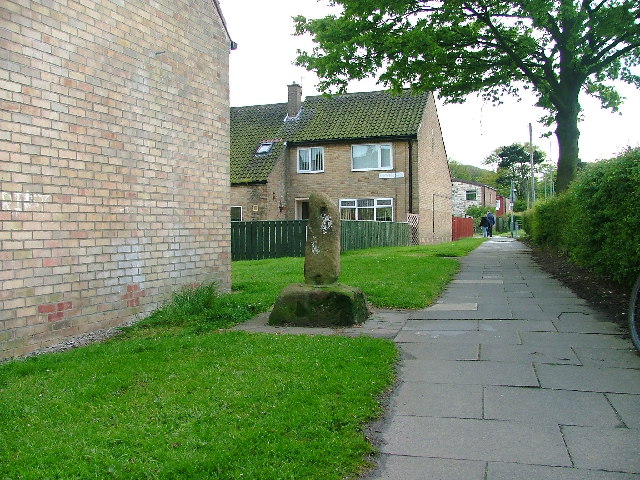
Askham Bryan is mentioned in the Domesday Book. The name comes from Ascam or Ascha meaning "enclosure of ash-tree". "Bryan" is Bryan FitzAlan. He and his heirs held the manor from the 12th century.
Here "c" can be also taken as "k" sound. And if you note, all words above which are variants for the the word "Askham", has "s" before, which indicates that this is the "sk" (or "ks" or "kch"if one misspells, dyslexic, or has left-to-right or right-to-left erros). The sound is like in the word "Kshatriya", but some people say it like "Shatriya", or Shaktriya" to an uninitiated, and the meanings are very close and related.
Here the "s" or "ch" is the Palatal "Ch", and there is some rules which says when the sibilant sounds come, one needs to combine with "k" sound. Then often palatal sounds are converted to guttaral sounds or vice versa. But here "ks" is a very common prefix. One may also write like "aksh".
skandha = shoulder, stem or trunk of a tree; section, chapter of a book, mass, multitude, a whole or aggregate.
akshaya - Not Destroyed, Space. Objective will be "aksham"
askhalana - not wavering from (abl.), firmness, which is an attribute of tree, rock or trunk.
Askanda - not spilling, holding - an attribute of tree, rock or trunk.
askandayant - not spilling; not omitting or neglecting.
askanna - not being split
askhalana - not wavering from (abl.), firmness
Also, note the word "Nag" associated with a Pub at Askham_Bryan. Naga, or Naagas, is/was a cullt Snake Worshipers,and associated with Shiva Worship and the lower form the Tantra - taken up in the West - which has eating meat, drinking alcohol, revelry, and sex as part of their beliefs. Perhaps it is a remnants of the early days of the world religions when forest dwelling was going on. In India, the Bheels were like this during till late 20th Century.
BTW, I have a colleague called Bryan, and he is from Irish and German background. I asked him what does his name mean. He said it meant a Head, Lord, Provider.
Interestingly I could predict this meaning just by the beginning sound of "bR" or "bhR", which both are also connected. "bR" means to grow, to become strong, to expand, etc. That is why the Super Soul or the First Principle which I call, is called Brahaman, by which the priests were called "Brahmanaas" or ""Brahmanaah".
The other root is "bhR", which means to feed, to look after, to protect, to support, to shine, to posses, etc.
So one would say this is all co-incidences? And we know about the Proto Indo European people being the same with a common language, common religion, and common civilization. Now see the Temple of Mithra in London.
This was a temple built by the Romans when they colonized England before the advent of Christianity. The Romans had taken the God from Persians as per the Western History. The same God is known in the Vedas as Mitra. One can take "t" and "th" sound as normal corruptions.
Still far fetched? Read the following postings:
Shiva in Europe
Om Phallos in Rome
Romania and Armenia
Phoenicians and Panis
Metion of Varun, Mitra and Mahesh in Mittani and Hittites Treaty
Dental "T" and "D" are interchange able and one is a Hard Constant and the other is a Soft Constant. Besides, it is noted that many people when communicating, will find that people say the one sound, and the other party understands the other!
Then "T" and "Th" are basically same, one is not aspirated and the other is.
So this was just another co-incidence? I thought maybe. I started following more links and found this Ruther Cross. We know that even after people are converted, they carry some of their old religious beliefs and traditions. This reminds me of a Shiv Lingam, and we know from other articles, that Shiva was God, or the Male or Father Principle was worshiped throught Middle East and Europe as well. It was in America also, and at Golden Gate Park, in San Francisco, they found a Shiva Lingam, of which I have the video. It became a world tourist spot for Hindus, till the Authorities decided to remove the so called object of public nuisance.
Askham Bryan is mentioned in the Domesday Book. The name comes from Ascam or Ascha meaning "enclosure of ash-tree". "Bryan" is Bryan FitzAlan. He and his heirs held the manor from the 12th century.
Here "c" can be also taken as "k" sound. And if you note, all words above which are variants for the the word "Askham", has "s" before, which indicates that this is the "sk" (or "ks" or "kch"if one misspells, dyslexic, or has left-to-right or right-to-left erros). The sound is like in the word "Kshatriya", but some people say it like "Shatriya", or Shaktriya" to an uninitiated, and the meanings are very close and related.
Here the "s" or "ch" is the Palatal "Ch", and there is some rules which says when the sibilant sounds come, one needs to combine with "k" sound. Then often palatal sounds are converted to guttaral sounds or vice versa. But here "ks" is a very common prefix. One may also write like "aksh".
skandha = shoulder, stem or trunk of a tree; section, chapter of a book, mass, multitude, a whole or aggregate.
akshaya - Not Destroyed, Space. Objective will be "aksham"
askhalana - not wavering from (abl.), firmness, which is an attribute of tree, rock or trunk.
Askanda - not spilling, holding - an attribute of tree, rock or trunk.
askandayant - not spilling; not omitting or neglecting.
askanna - not being split
askhalana - not wavering from (abl.), firmness
Also, note the word "Nag" associated with a Pub at Askham_Bryan. Naga, or Naagas, is/was a cullt Snake Worshipers,and associated with Shiva Worship and the lower form the Tantra - taken up in the West - which has eating meat, drinking alcohol, revelry, and sex as part of their beliefs. Perhaps it is a remnants of the early days of the world religions when forest dwelling was going on. In India, the Bheels were like this during till late 20th Century.
BTW, I have a colleague called Bryan, and he is from Irish and German background. I asked him what does his name mean. He said it meant a Head, Lord, Provider.
Interestingly I could predict this meaning just by the beginning sound of "bR" or "bhR", which both are also connected. "bR" means to grow, to become strong, to expand, etc. That is why the Super Soul or the First Principle which I call, is called Brahaman, by which the priests were called "Brahmanaas" or ""Brahmanaah".
The other root is "bhR", which means to feed, to look after, to protect, to support, to shine, to posses, etc.
So one would say this is all co-incidences? And we know about the Proto Indo European people being the same with a common language, common religion, and common civilization. Now see the Temple of Mithra in London.
This was a temple built by the Romans when they colonized England before the advent of Christianity. The Romans had taken the God from Persians as per the Western History. The same God is known in the Vedas as Mitra. One can take "t" and "th" sound as normal corruptions.
Still far fetched? Read the following postings:
Shiva in Europe
Om Phallos in Rome
Romania and Armenia
Phoenicians and Panis
Metion of Varun, Mitra and Mahesh in Mittani and Hittites Treaty
Subscribe to:
Posts (Atom)


